Why DisCos Must Fix ATC&C Losses Before the Next Tariff Review
A quarter-by-quarter read of NERC’s 2025 and 2026 reports tells a plain story: the sector stopped improving just as the loss target got stricter, and without a step-change, the next tariff adjustment will be calculated against a gap that is widening, not closing.
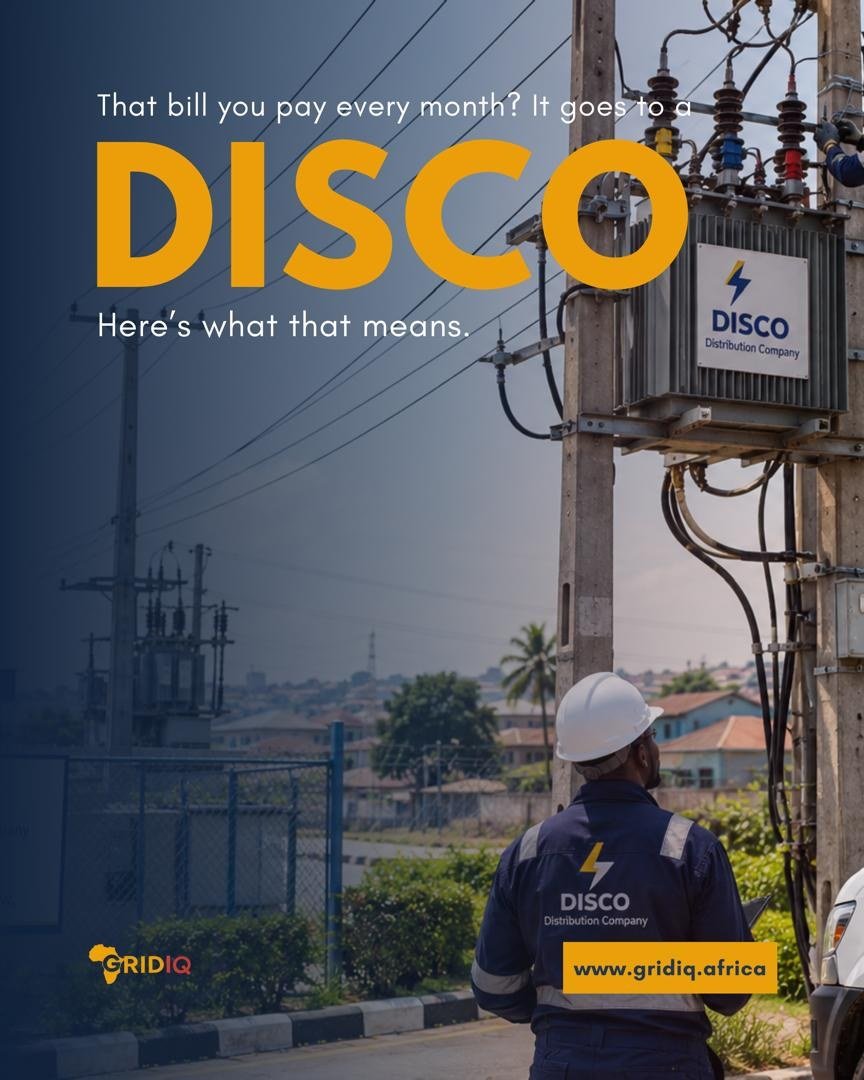
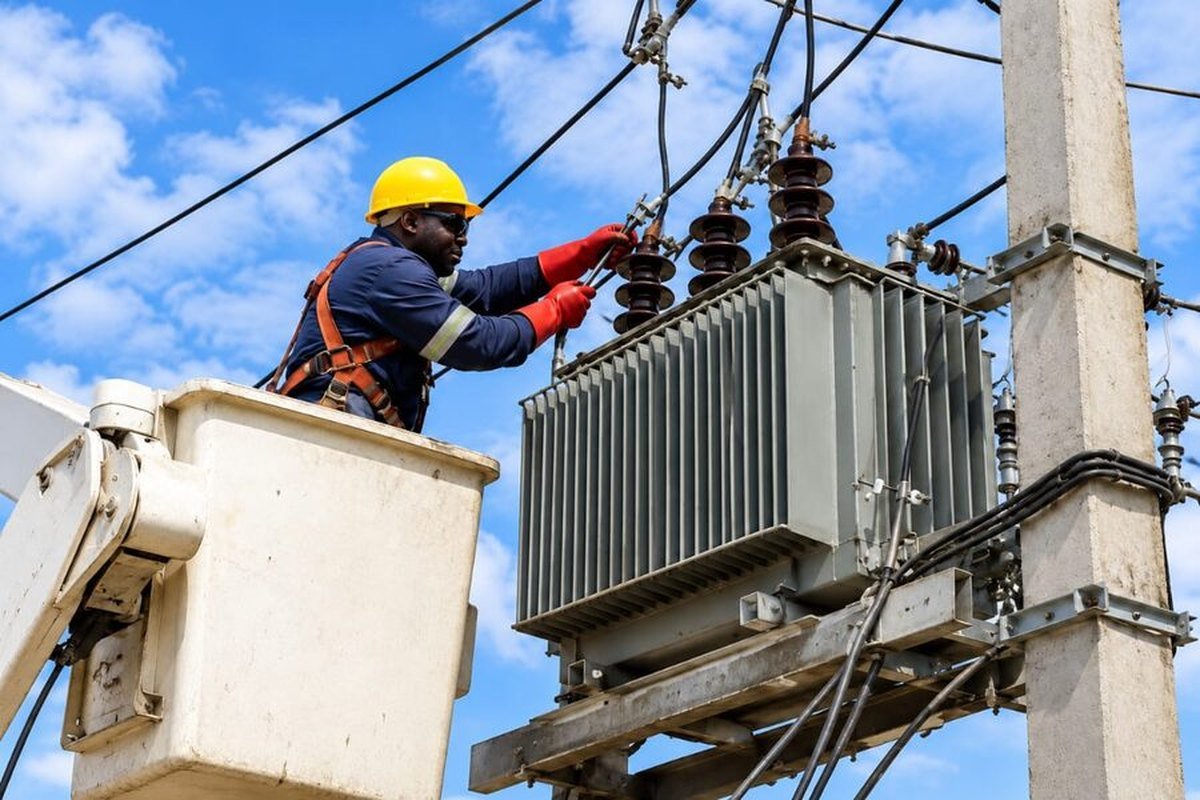
A field technician completes maintenance on a distribution transformer. Metering and feeder-level maintenance quality are the strongest predictors of ATC&C performance across Nigeria’s DisCos. Illustrative.
Nigeria’s electricity distribution companies lost 37.44% of the energy delivered to them in the first quarter of 2026, to faulty meters, unbilled consumption, and uncollected bills. Read against the sector’s own recent numbers, that reading is a step backwards: 2.5 points worse than the 34.90% of Q4 2025, and 4.2 points worse than the 33.27% of Q3 2025, the best quarter of the current MYTO era. Only against the very start of 2025, Q1’s 39.61%, does Q1 2026 look like an improvement, and a slender one at that. The gap between what regulation demands and what the network actually delivers has not been closing across 2025 into 2026. It has been widening, even as the target itself got stricter.
| Metric | Figure | What it means for the tariff review |
|---|---|---|
| National ATC&C loss, 2026 Q1 | 37.44% | More than double the 16.92% MYTO target for the year |
| Move since the Q3 2025 low | +4.17pp | Two straight quarters worse after the 33.27% best-ever reading |
| 2025 vs 2024 annual average | 36.43% vs 36.34% | A full year passed and the loss rate did not move |
| Gap to 2026 MYTO target | 20.52pp | Widened 6.16pp in a single quarter (Q4’25→Q1’26) |
| Unrecovered revenue, 2026 Q1 | ₦357.6bn | Against a ₦955.2bn target revenue base |
| DisCos above 40% loss | 6 of 11 | Enugu, Ibadan, Jos, Kaduna, Kano, Yola |
This is GridIQ’s read of NERC’s quarterly reports across 2025 and into 2026, five consecutive quarters of Aggregate Technical, Commercial & Collection (ATC&C) loss data, cross-checked against billing and collection efficiency, DisCo-level performance, and the Naira value of what regulation says should have been collected and wasn’t. Placed side by side, the reports show the same thing from every angle: the improvement that carried the sector from 2022 to mid-2024 did not extend into 2025, and 2026 has opened by giving back most of 2025’s best quarter.
2025 Into 2026: The Year the Curve Went Flat
The five quarters that matter for the next tariff review run from Q1 2025 to Q1 2026, and they do not trend. The sector opened 2025 at 39.61%, improved for two quarters to a genuine low of 33.27% in Q3, the best reading of the current MYTO era, then reversed: 34.90% in Q4 2025 and 37.44% in Q1 2026. That is two consecutive quarters of deterioration, erasing more than three-quarters of the gain made in the first three quarters of 2025. A line that ends higher than it began, having briefly gone lower, is not progress interrupted. It is a plateau with noise on it.
The annual averages remove the noise and make the point bluntly: 36.34% in 2024, 36.43% in 2025, statistically identical, despite a full year passing and despite MYTO tightening the sector target from 20.54% for 2025 to 16.92% for 2026, a 3.6-point cut. The result is a gap to target that widened by 6.16 points in a single quarter, from 14.36pp at the end of 2025 to 20.52pp at the start of 2026: the loss rate rose 2.54 points and the bar dropped 3.62 points at the same moment. At the pace the sector actually moved across 2025, closing the remaining gap to the 2026 target is a matter of years, not the one or two the tariff calendar assumes.
| Quarter | ATC&C loss | MYTO target | Gap to target | vs prior qtr |
|---|---|---|---|---|
| 2025 Q1 | 39.61% | 20.54% | 19.07pp | — |
| 2025 Q2 | 37.92% | 20.54% | 17.38pp | improving 1.69pp |
| 2025 Q3 | 33.27% | 20.54% | 12.73pp | improving 4.65pp |
| 2025 Q4 | 34.90% | 20.54% | 14.36pp | worse 1.63pp |
| 2026 Q1 | 37.44% | 16.92% | 20.52pp | worse 2.54pp |
A Collection Problem, Not Just a Technical One
ATC&C loss is a compound figure: 1 − (Billing Efficiency × Collection Efficiency). Billing efficiency asks whether DisCos are correctly metering and invoicing the energy they receive; collection efficiency asks whether they can actually get paid for what they invoice. Splitting the last four quarters apart shows where the erosion is really coming from.
Neither line moves in a straight direction, and that is itself the signal. Collection efficiency climbed from 76.07% in Q2 2025 to a 2025 high of 80.70% in Q3, then slipped back for two straight quarters to 78.95% in Q1 2026, net up 2.9 points over the year, but giving back more than half its gain in the final six months. Billing efficiency moved the other way: it peaked at 82.69% in Q3 2025 and has fallen in every quarter since, down to 79.24% by Q1 2026, a net decline of 2.4 points. Neither metric has found a stable footing, billing efficiency is currently the faster-eroding of the two, which points to metering and invoicing accuracy, not just payment collection, as the more urgent near-term fix.
Tariff design corrects for the price DisCos charge; it does nothing for energy they never bill or never collect on in the first place.
What It Costs, In Naira
NERC’s reports have, since late 2024, begun stating the naira gap explicitly: target revenue at approved tariffs, versus what DisCos actually billed and collected. In 2026 Q1, that gap was ₦357.63 billion against a target revenue base of ₦955.19 billion, effectively the same 37.4% shortfall the ATC&C percentage implies, confirmed independently in Naira terms. The quarter before, Q4 2025, the shortfall was ₦338.26 billion against ₦969.19 billion targeted. Across all four quarters of 2025 that NERC has reported a Naira loss figure for, the cumulative shortfall against target revenue comes to roughly ₦606.5 billion, money the sector’s own tariff order says should exist, and doesn’t.
This is the number that should anchor the “next tariff review” debate, because it reframes the question. A tariff increase raises the price charged for energy that is billed and collected. It does nothing about ₦357.6 billion a quarter that was never billed, never metered correctly, or billed and never collected. Under the FGN subsidy arrangement that has held retail tariffs frozen since July 2024, the fiscal cost of that shortfall does not disappear, it shifts, either to the federal subsidy line or to DisCo balance sheets already under remittance pressure from NBET and the Market Operator.
There is a near-perfect symmetry worth pausing on. The energy the DisCos failed to recover in Q1 2026, ₦357.6 billion, is almost exactly the ₦358.3 billion the Federal Government paid in electricity subsidy over the very same quarter. Two different holes in the sector’s balance sheet, each about a third of a trillion naira a quarter, and only one of them is even nominally the tariff’s job to close. We take up the subsidy side of that ledger in a companion feature, The Frozen Tariff.
The National Average Hides an 11-DisCo Range From 20% to 70%
Averaging across eleven DisCos flattens a genuinely bimodal sector. Eko (20.2%) and Ikeja (24.6%) already run inside striking distance of MYTO-grade performance. Kaduna (69.7%), Yola (56.4%) and Jos (58.0%) are losing more than half of everything they receive. Six of eleven DisCos, Enugu, Ibadan, Jos, Kaduna, Kano, and Yola, are currently posting ATC&C loss above 40%, more than double their MYTO targets.
| DisCo | Metering rate | ATC&C loss | MYTO target | Status |
|---|---|---|---|---|
| Eko | 88.5% | 20.2% | 14.2% | Near target |
| Ikeja | 88.0% | 24.6% | 13.5% | Near target |
| Abuja | 79.8% | 31.9% | 17.0% | Elevated |
| Port Harcourt | 66.9% | 36.0% | 16.7% | Elevated |
| Benin | 58.0% | 39.7% | 17.2% | Elevated |
| Enugu | 51.6% | 42.7% | 18.1% | Elevated |
| Ibadan | 52.6% | 48.1% | 17.5% | Critical |
| Kano | 35.4% | 45.1% | 17.5% | Elevated |
| Jos | 34.6% | 58.0% | 20.8% | Critical |
| Kaduna | 36.4% | 69.7% | 18.2% | Critical |
| Yola | 33.2% | 56.4% | 29.0% | Elevated |
The relationship between metering and loss is about as strong as social-science data gets: DisCos with more metered customers lose less energy, almost linearly (correlation coefficient −0.91). Unmetered customers are estimate-billed, and estimate billing is where both technical loss (no feedback on actual consumption) and commercial loss (disputed, unpaid, or simply wrong bills) originate. National metering coverage moved from 54.33% to 59.13% between June 2025 and March 2026, a 4.8-point gain in nine months. At that rate, closing the metering gap for the worst-performing DisCos is a multi-year capital programme, not a policy announcement.
Kaduna: What Happens When the Gap Goes Unaddressed
On 11 August 2026, NERC took the unusual step of placing Kaduna Electric under regulatory takeover, citing accumulated market debt of ₦456.5 billion and a persistent inability to meet remittance obligations. Kaduna’s ATC&C loss, 69.66% in the most recent DisCo-level data GridIQ reviewed, is the highest of any DisCo in the country and more than 3.8× its MYTO target. Its metering rate, at 36.43%, is among the lowest.
Kaduna is not an outlier event. It is the endpoint of a trend line every other laggard DisCo is also on, low metering, high loss, chronic under-remittance, compounding quarter over quarter until the regulator runs out of tariff tools and reaches for administrative ones.
— GridIQ Analytics and Insight Ltd
Kaduna is what happens when loss reduction is treated as a target to report against rather than a capital and operating priority to fund. Five more DisCos are on a trajectory that could put them in the same position within two to three MYTO cycles if the current stall persists.
NERC’s Own Move Signals It Agrees
On 4 September 2026, NERC issued a Revised Order on Successor Distribution Companies’ Utilisation of Earned Non-Admin Operating Expenditure (NERC/2026/062A), redirecting DisCo “surplus” revenue, margin earned above the MYTO-allowed return, into ring-fenced CapEx accounts rather than leaving it as freely distributable income. Read alongside seventeen quarters of stalled ATC&C performance, the intent is legible: the regulator is trying to force loss-reduction investment out of DisCos that have not been making it voluntarily, because the commercial case for reducing losses is stronger for DisCos than for the sector when remittance obligations, not loss reduction, determine near-term cash flow.
That is the structural tension the next tariff review inherits. Under the DRO regime introduced in January 2024, DisCos remit against an obligation set independently of how much they actually collect; a DisCo that under-collects still owes the same obligation, funded either by squeezing CapEx, delaying supplier payments, or accumulating the kind of arrears that put Kaduna into administration. Tariff increases raise the obligation’s revenue base but do nothing to change the incentive that lets loss reduction stay a second priority.
The risk to the next tariff cycle: If ATC&C loss is still running near 37% when the next tariff order is calculated, either (a) the cost-reflective tariff embeds today’s loss rate and customers pay for inefficiency they didn’t cause, or (b) the tariff assumes MYTO-target loss rates DisCos are nowhere close to hitting, and the revenue gap reopens the subsidy and remittance pressure that produced Kaduna. Neither outcome is what “the next phase of tariff adjustments” is supposed to deliver.
What Still Needs to Be True
None of this is self-correcting on the current trajectory. Four conditions determine whether the next tariff review lands on a sector that has actually closed the gap, or one still carrying the same loss rate it had two years ago, dressed in a new tariff order:
- A second consecutive quarter of improvement. Seven quarters of range-bound performance (33.3%–39.6%) is long enough that one good reading should not be read as a reversal. Q2 2026 either confirms Q1’s direction or confirms the plateau is the new normal.
- The ring-fenced CapEx order reaching the feeder, not just the balance sheet. NERC/2026/062A only closes the loss gap if redirected surplus revenue actually funds metering and feeder investment, rather than being absorbed elsewhere in DisCo cost structures the way earlier operating-expenditure flexibility often was.
- A credible template out of Kaduna, not just an emergency measure. How NERC restructures Kaduna’s operations and ₦456.5 billion in debt will signal what happens to the next DisCo that crosses a similar threshold, and on current numbers, several are on that path.
- Metering investment sustained past the current pace. National coverage gained 4.8 points in nine months. At that rate, closing the metering gap for the six worst-performing DisCos is a multi-year programme, not a policy announcement, and any change in pace shows up in ATC&C figures roughly two quarters later.
The Bottom Line for GridIQ Readers
Strip away the quarterly noise, and the data makes one point cleanly: Nigeria’s DisCos found real loss-reduction gains between 2022 and mid-2024, and have not found a second round of them since. A tariff review calculated against today’s 37% loss rate asks customers to pay for inefficiency they did not cause; one calculated against MYTO’s 16.92% target assumes a performance level the sector is nowhere near, reopening exactly the subsidy and remittance pressure that put Kaduna into administration. For GridIQ’s readers tracking the next tariff cycle, the metric to watch is not the headline percentage on review day, it is whether ATC&C loss has actually moved between now and then, or whether the sector is once again asking a price change to do a collections problem’s job.
Methodology & sourcing. ATC&C loss, billing-efficiency, collection-efficiency, DisCo-level and Naira-shortfall figures for Q1 2025 through Q1 2026 are drawn directly from NERC’s published Quarterly Reports on the Performance of the Nigerian Electricity Supply Industry (nerc.gov.ng). The 2024 comparison figures used for the annual-average context are from the same NERC series. All billing-efficiency × collection-efficiency identities were independently recomputed by GridIQ and reconciled against NERC’s headline ATC&C figure for each quarter. MYTO target figures reflect NERC’s published sector-average and DisCo-level targets in force for each year (20.54% for 2025, 16.92% for 2026); targets are revised periodically and comparisons should be read against the vintage in force at the time.
© 2026 GridIQ Analytics and Insight Ltd. Figures are drawn from NERC’s public quarterly disclosures and named secondary sources; loss rates, targets, and revenue figures have varied across reporting cycles. This piece is an editorial analysis, not investment, legal, or regulatory advice.